
The role of nursing in the 35 years of the Unified Health System - SUS
DOI:
https://doi.org/10.62827/eb.v24i5.4100Abstract
This article analyzes the role of Nursing over the 35 years of Brazil’s Unified Health System (SUS), highlighting its historical, political, and technical contributions to the consolidation of health as a citizenship right in the country. Based on a theoretical and reflective approach grounded in authors such as Paim, Merhy, Ceccim, Egry, and Freire, the discussion addresses the participation of the profession in the struggles of the Sanitary Reform, its role in Primary Health Care (PHC) and in care management, as well as the contemporary challenges related to professional recognition, working conditions, and critical training. The analysis demonstrates that Nursing, as the largest workforce within the SUS, plays a central role in implementing the principles of universality, comprehensiveness, and equity, while also serving as a guardian of the ethical-political project of collective health. It concludes that strengthening Nursing means strengthening the SUS itself, demanding public policies that recognize its leadership and ensure dignified conditions for the exercise of humanized and emancipatory care.
References
Conselho Federal de Enfermagem (Cofen). Perfil da Enfermagem no Brasil. Brasília: Cofen; 2017.
Paim JS. A Reforma Sanitária Brasileira: contribuição para a compreensão e crítica. Salvador: EDUFBA; 2008.
Starfield B. Atenção Primária: equilíbrio entre necessidades de saúde, serviços e tecnologia. Brasília: Unesco; 2002.
Ayres JRCM. Cuidado: trabalho e interação nas práticas de saúde. Rio de Janeiro: CEPESC/IMS/UERJ; 2004.
Ministério da Saúde (BR). Política Nacional de Humanização da Atenção e Gestão do SUS. Brasília: MS; 2003.
Conselho Federal de Enfermagem (Cofen). Enfermagem em tempos de pandemia: desafios e aprendizados. Brasília: Cofen; 2021.
Brasil. Lei nº 14.434, de 4 de agosto de 2022. Institui o piso salarial nacional da Enfermagem. Diário Oficial da União, Brasília, DF, 5 ago 2022.
Batista KBC, Schraiber LB. Gênero e trabalho na Enfermagem brasileira. Rev Bras Enferm. 2013;66(5):785–93.
Fundação Oswaldo Cruz (Fiocruz). Pesquisa em Enfermagem no Brasil: panorama e desafios. Rio de Janeiro: Fiocruz; 2020.
Conselho Federal de Enfermagem (Cofen). Carta da Enfermagem Brasileira pelo SUS. Brasília: Cofen; 2023.
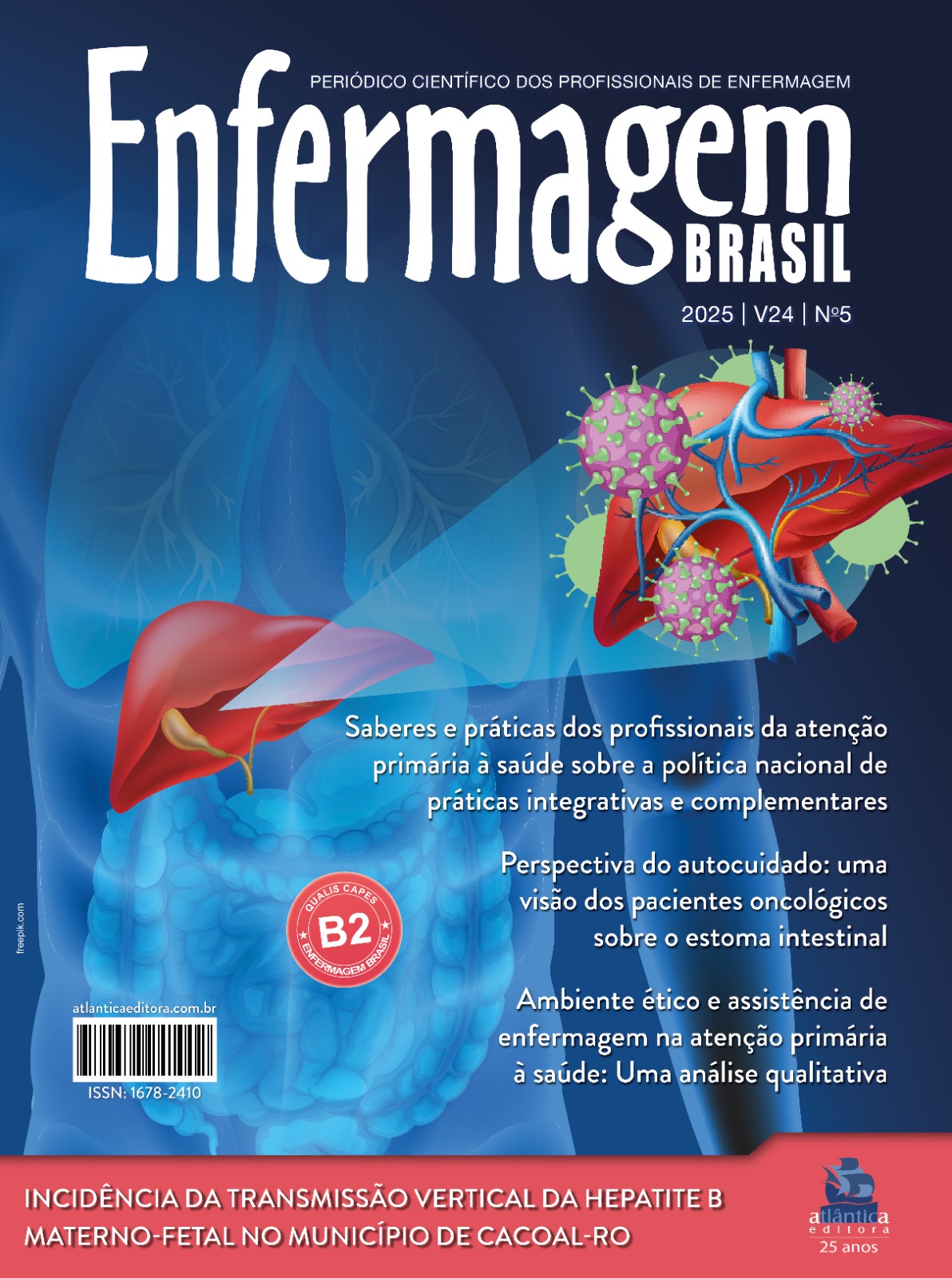
Downloads
Published
Issue
Section
License
Copyright (c) 2025 Luís Paulo Souza e Souza, Túlio Almeida Dias, Carla Silvana de Oliveira e Silva (Autor)

This work is licensed under a Creative Commons Attribution 4.0 International License.
Autores que publicam nesta revista concordam com os seguintes termos:
Autores mantém os direitos autorais e concedem à revista o direito de primeira publicação, com o trabalho simultaneamente licenciado sob a Licença Creative Commons Attribution 4.0 que permite o compartilhamento do trabalho com reconhecimento da autoria e publicação inicial nesta revista.
Autores têm autorização para distribuição não-exclusiva da versão do trabalho publicada nesta revista (ex.: publicar em repositório institucional ou como capítulo de livro), com reconhecimento de autoria e publicação inicial nesta revista.