Raissa Luisa da Silva Batista1, Maria das Graças Wanderley de Sales Coriolano1, Carla Cabral dos Santos Accioly Lins1, Renata Muniz Freire Vinhal Siqueira Jardim1, Joana Alves da Mata Ribeiro1
1Universidade Federal de Pernambuco (UFPE), Recife, PE, Brasil
Received: September 1, 2025; Accepted: October 7, 2025.
Correspondence: Raissa Luisa da Silva Batista, raissa.luisa@ufpe.br
How to cite
Batista RLS, Coriolano MGWS, Lins CCSA, Jardim RMFVS, Ribeiro JAM. Digital Health Literacy Scale (eHEALS) and the assessment of digital health literacy in older adults: An integrative review. Geronto Bras. 2025;1(1):98-113. doi:10.62827/gb.v1i1.0009
Abstract
Introduction: Digital health literacy is a relevant concept, representing a person’s ability to analyze, understand, and apply health-related topics to themselves and their community. Being health literate, or having eHealth literacy, in an electronic world requires a different or at least expanded set of skills to engage in health care and health promotion. Objective: Recent scientific literature on the use of instruments to assess digital literacy in health among older adults was analyzed, answering the question: “What is the contribution of the eHEALS scale in assessing digital literacy in health among older adults?” Methods: definition of the research question, establishment of inclusion and exclusion criteria, definition of descriptors, database search, selection of studies for review, information extraction, interpretation of results, and presentation of the integrative review. The search for articles considered the following keywords and descriptors, indexed in the Health Sciences Descriptors (DeCS) and Medical Subject Headings (MeSH): elderly; elderly aged 80 years or older; information literacy; digital literacy; health literacy; and health, combined with Boolean operators (AND and OR). Results: Six articles were found, one of which used a semi-structured questionnaire to assess digital health literacy in older adults, while the other five articles used the eHEALS or its modified version. Conclusion: There are few specific, objective, and validated instruments to assess digital health literacy in older adults eHEALS is currently the only tool available for this purpose.
Keywords: Aged; Computer Literacy; Health; Evaluation of Research Programs and Tools.
Resumo
Escala de alfabetização em saúde digital (eHEALS) e a avaliação do letramento digital em saúde das pessoas idosas: Revisão integrativa
Introdução: A alfabetização em saúde digital é um conceito relevante, representando a capacidade de uma pessoa de analisar, compreender e aplicar tópicos relacionados à saúde para si mesma e para a comunidade. Ser alfabetizado em saúde, ou ter alfabetização em eSaúde, em um mundo eletrônico requer um conjunto diferente ou pelo menos ampliado de habilidades para se envolver na atenção à saúde e na promoção da saúde. Objetivo: Analisou-se a produção científica recente sobre o uso de instrumentos para avaliar a alfabetização digital em saúde em pessoas idosas, respondendo à pergunta: “Qual é a contribuição da escala eHEALS na avaliação da alfabetização digital em saúde de pessoas idosas?” Métodos: definição da questão de pesquisa, estabelecimento de critérios de inclusão e exclusão, definição de descritores, pesquisa em bancos de dados, seleção de estudos para a revisão, extração de informações, interpretação dos resultados e apresentação da revisão integrativa. A pesquisa de artigos considerou as seguintes palavras-chave e descritores, indexados no Descritores em Ciências da Saúde (DeCS) e Medical Subject Headings (MeSH): idosos; idosos com 80 anos ou mais; alfabetização informacional; alfabetização digital; alfabetização em saúde; e saúde, combinados com operadores booleanos (AND e OR). Resultados: foram encontrados seis artigos, dos quais um utilizou um questionário semiestruturado para avaliar a alfabetização digital em saúde em idosos, enquanto os outros cinco artigos utilizaram a Escala de Alfabetização em Saúde Digital (eHEALS) ou sua versão modificada. Conclusão: existem poucos instrumentos específicos, objetivos e validados para avaliar a alfabetização digital em saúde em idosos a eHEALS é atualmente a única ferramenta disponível para esse fim.
Palavras-chave: Pessoa Idosa; Alfabetização Digital; Saúde; Avaliação de Programas e Instrumentos de Pesquisa.
Resumen
Escala de alfabetização em saúde digital (eheals) e a avaliação do letramento digital em saúde das pessoas idosas: revisão integrativa
Introducción: La alfabetización en salud digital es un concepto relevante, que representa la capacidad de una persona para analizar, comprender y aplicar temas relacionados con la salud para sí misma y para la comunidad. Ser alfabetizado en salud, o tener alfabetización en eSalud, en un mundo electrónico requiere un conjunto diferente o al menos ampliado de habilidades para involucrarse en la atención a la salud y en la promoción de la salud. Objetivo: Se analizó la producción científica reciente sobre el uso de instrumentos para evaluar la alfabetización digital en salud en personas mayores, respondiendo a la pregunta: Cuál es la contribución de la escala eHEALS en la evaluación de la alfabetización digital en salud de personas mayores? Métodos: definición de la cuestión de investigación, establecimiento de criterios de inclusión y exclusión, definición de descriptores, búsqueda en bases de datos, selección de estudios para la revisión, extracción de información, interpretación de los resultados y presentación de la revisión integrativa. La búsqueda de artículos consideró las siguientes palabras clave y descriptores, indexados en Descriptores en Ciencias de la Salud (DeCS) y Medical Subject Headings (MeSH): personas mayores; personas mayores de 80 años o más; alfabetización informacional; alfabetización digital; alfabetización en salud; y salud, combinados con operadores booleanos (AND y OR). Resultados: se encontraron seis artículos, de los cuales uno utilizó un cuestionario semiestructurado para evaluar la alfabetización digital en salud en personas mayores, mientras que los otros cinco artículos utilizaron la Escala de Alfabetización en Salud Digital (eHEALS) o su versión modificada. Conclusión: existen pocos instrumentos específicos, objetivos y validados para evaluar la alfabetización digital en salud en personas mayores; la eHEALS es actualmente la única herramienta disponible para este fin.
Palavras-clave: Persona Mayor; Alfabetización Digital; Salud; Evaluación de Programas e Instrumentos de Investigación.
Introduction
Advances in health and technology have driven demographic transition, beginning in some European countries in the second half of the 18th century, and expanding to others in the 19th and 20th centuries [1]. Modern medical advances are improving health conditions and reducing early mortality. Alongside these developments, health policies, incentives, and substantial technological progress have contributed to a considerable increase in the older population worldwide in recent decades [2].
Access to information, social media, and technology from cell phones to household appliances is increasingly widespread and necessary for daily tasks. Consequently, computer use and the drive to master information technology have been growing [3]. Digital technologies as support self-care tools are becoming more popular, using mobile devices to acquire knowledge on health-related issues [4].
Hence, digital health literacy is a relevant concept, representing one’s ability to analyze, understand, and apply health-related topics for themselves and the community [5]. Being health-literate, or having eHealth literacy, in an electronic world requires a different or at least expanded set of skills to engage in healthcare and promotion [6].
Evaluating older people’s digital literacy through psychometric instruments can help capture these heterogeneous and subjective elements in this population, thus ensuring their successful digital learning and training in this aspect [7].
Mobile device usage is increasingly popular among older adults. However, there are questions about their digital health literacy, which only a few assessment tools can currently evaluate.
This integrative review aimed to analyze recent scientific literature on using instruments to assess older adults’ digital health literacy by answering the following question, “What is the contribution of the eHEALS scale in assessing the digital health literacy of older adults?”.
Methods
This integrative literature review had the following steps: defining the research question, establishing inclusion and exclusion criteria, defining descriptors, searching databases, selecting studies for the review, extracting information, interpreting results, and presenting the integrative review.
The database search was conducted on MEDLINE/PubMed, LILACS, EMBASE, Scopus, and Web of Science on October 11, 2023, guided by the following research question, “What is the contribution of the eHEALS scale in assessing the digital health literacy of older adults?”.
The inclusion criteria for eligibility were original scientific studies that addressed digital health literacy and assessment instruments. The exclusion criterion was a study population under 60 years old. No filters were applied in the searches.
The search for articles considered the following keywords and descriptors, indexed in the Health Science Descriptors (DeCS) and Medical Subject Headings (MeSH): aged; aged, 80 and over; computer literacy; digital literacy; health literacy; and health, combined with Boolean operators (AND and OR).
The study used the following search strategies:
- For the PubMed database: (aged[MeSH Terms]) OR (aged, 80 and over[MeSH Terms]) AND (digital literacy[MeSH Terms]) OR (computer literacy[MeSH Terms]) AND (health[MeSH Terms]) OR (health literacy[MeSH Terms]).
- For the LILACS database: (“IDOSO”) or “IDOSOS DE 80 ANOS OU MAIS” [Descritor de assunto] and “ALFABETIZAÇÃO DIGITAL” [Descritor de assunto] and “saude” [Descritor de assunto].
- For the EMBASE database: (‘aged’/exp OR ‘very elderly’/exp) and (‘internet literacy’/exp OR ‘computer literacy’/exp) and (‘health’/exp OR ‘health literacy’/exp).
- For the Scopus database: (KEY (“aged”) OR KEY (“aged, 80 and over”) AND KEY (“digital literacy”) OR KEY (“computer literacy”) AND KEY (“health”) OR KEY (“health literacy”).
- For the Web of Science database: “aged” (Topic) or “aged, 80 and over” (Topic) AND “digital literacy” (Topic) or “computer literacy” (Topic) AND “health” (Topic) or “health literacy” (Topic).
After the database search results, two reviewers used the Rayyan web application in the first stage (title and abstract reading) to assist in the study selection for the review. A third reviewer was included to resolve conflicts.
They used two tools to evaluate and select articles for the review – the adapted Critical Appraisal Skills Programme (CASP) and the Agency for Healthcare Research and Quality (AHRQ).
The CASP is rated in 10 items: 1) clear and justified objective; 2) appropriate methodology; 3) presentation and discussion of theoretical and methodological procedures; 4) adequate sample selection; 5) detailed data collection; 6) relationship between the researcher and participants; 7) preserved ethical aspects; 8) rigorous and grounded data analysis; 9) presentation and discussion of results; and 10) contributions, limitations, and suggestions for further research questions. Each item was assigned a value of 0 (zero) or 1 (one); the result was the sum of the scores, and the maximum score was 10 points. Scores of 6 to 10 points indicate good methodological quality and reduced bias, while a minimum of 5 points indicates satisfactory methodological quality but with an increased risk of bias.
The AHRQ classifies the quality of evidence into seven levels: I) systematic reviews or meta-analyses; II) randomized clinical trials; III) non-randomized clinical trials; IV) cohort and case-control studies; V) systematic reviews of descriptive and qualitative studies; VI) a single descriptive or qualitative study; and VII) expert opinions and/or specialty committee reports.
Results
According to the established criteria, the database search yielded 32 articles in MEDLINE/PubMed, no articles in LILACS, 125 articles in EMBASE, 331 articles in Scopus, and 71 articles in Web of Science – totaling 559 articles, of which 146 were duplicates. After applying the inclusion and exclusion criteria, six articles were selected for inclusion in the study (Figure 1).
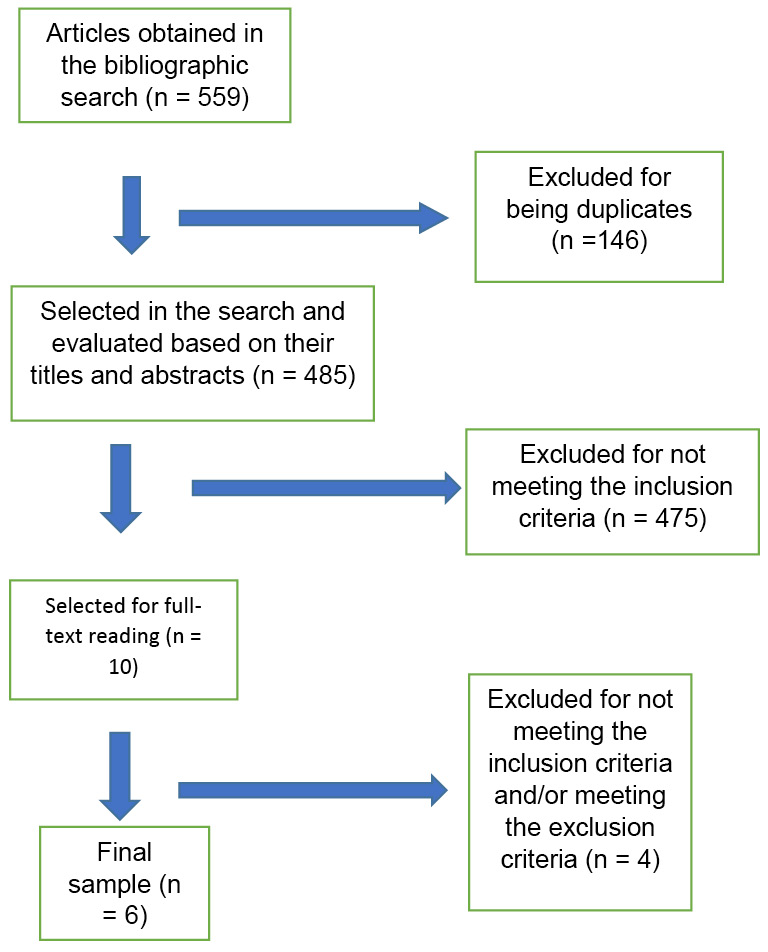
Figure 1 - Flowchart of the article selection stages
No article was excluded after applying the critical appraisal instruments. The CASP scores were equal to or greater than 7 for all selected articles, indicating good methodological quality and reduced bias, and all were at the same level of evidence according to the AHRQ. These evaluations ensure the reliability of the present study. The instruments’ article classification is presented in Table 1.
Table 1 - Classification of the articles according to the Critical Appraisal Skills Programme (CASP) and Agency for Health Care Research and Quality (AHRQ). Recife-PE, Brazil, 2024
|
Article (author, year) |
CASP |
AHRQ |
|
Kim et al., 2023. |
8 |
IV |
|
Wu et al., 2023. |
9 |
IV |
|
De Main et al., 2022. |
9 |
IV |
|
Berkowsky, 2021. |
7 |
IV |
|
Li et al., 2021. |
9 |
IV |
|
Gazibara et al., 2015. |
9 |
IV |
The selected studies cover from 2015 to 2023, with three from China, two from the USA, and one from Serbia. One of the six articles used a semi-structured questionnaire to assess digital health literacy among older adults, while the other five used the eHealth Literacy Scale (eHEALS) or its modified version. Chart 1 summarizes the articles, including authors, year, title, objective, main findings, study design, sample, assessment instrument, and conclusions.
Chart 1 - Identification of the articles according to authors, year, title, objective, main findings, study design, sample, assessment instrument, and conclusions. Recife-PE, Brazil, 2024
|
Title |
Year and country |
Design and number of patients |
Objective |
Main findings |
Assessment instrument |
Conclusions |
|
The Usage of Digital Health Technology among Older Adults in Hong Kong and the Role of Technology Readiness and eHealth Literacy: Path Analysis. |
2023 China |
Analytical cross-sectional study N= 306 |
To evaluate the current use of digital health technologies among older adults in Hong Kong and examine how high and low levels of digital health literacy in this group affect the relationship between the Technology Acceptance and Readiness Model and attitudes and intentions toward digital health technologies. |
Average daily use: 50% (n = 145) of participants use the Internet for 2 to 3 hours a day; 23% (n = 71) use the Internet for 5 or more hours a day. Most used mobile access (91.5%, n = 280). |
eHEALS |
The results partially supported the study hypotheses, emphasizing the impact of digital health literacy in encouraging older adults to use digital health technologies and gain health benefits. |
|
Chinese Community Home-Based Aging Institution Elders’ Self-Management of Chronic Non-Communicable Diseases and Its Interrelationships with Social Support, E-Health Literacy, and Self Efficacy: A Serial Multiple Mediation Model. |
2023 China |
Analytical cross-sectional study N= 289 |
To examine the mediating role of digital health literacy and general self-efficacy in the relationship between social support and self-management of non-communicable chronic diseases among residents of community-based institutions for older people in Chinese communities. |
Digital health literacy was positively associated with general self-efficacy and social support, and general self-efficacy was significantly positively associated with social support. Digital health literacy and general self-efficacy were both significantly positively related to self-management. |
eHEALS |
It clarified the multiple chain-mediated effects of digital health literacy and general self-efficacy in the relationship between self-management and social support. |
|
Assessing the Effects of eHealth Tutorials on Older Adults’ eHealth Literacy |
2022 EUA |
Cross-sectional study N= 91 |
To develop a multimedia tutorial on digital health literacy and evaluate the effectiveness of this tutorial in improving the digital health literacy of older adults. |
Time had a significant main effect on the effectiveness of digital health literacy. The Bonferroni post hoc analysis indicated significantly higher effectiveness of digital health literacy after than before the test. The Bonferroni follow-up tests indicated significantly greater computer/Internet knowledge after than before the test. |
eHEALS |
This was the first study to use a tutorial with overlapping instructions on websites and live demonstrations and show its effectiveness in digital health literacy for older adults. |
|
Exploring Predictors of eHealth Literacy Among Older Adults: Findings From the 2020 CALSPEAKS Survey. |
2021 EUA |
Analytical cross-sectional study N= 237 |
To use data from the 2020 CALSPEAKS survey to identify disparities in digital health literacy among older adults aged 65 and over residing in California, United States. |
The great majority reported using the Internet several times a day (86.1%). An average of 1.94 devices were used to access the Internet, and an average of 5.86 activities were performed online regularly. |
eHEALS, modified version |
Education and measures of experience and digital skills show strong and consistent associations with digital health literacy for older adults. |
|
Health-promoting behaviors mediate the relationship between eHealth literacy and health-related quality of life among Chinese older adults: a cross-sectional study |
2021 China |
Population-based cross-sectional study. Final sample with 2,300 valid questionnaires. |
To examine the association between digital health literacy and health-related quality of life (HRQOL) and explore whether health promotion behaviors mediate the association between digital health literacy and HRQOL among older Chinese adults. |
After controlling for covariates such as age, sex, residence, education level, marital status, average monthly household income, and activities of daily living, Model 1 showed that digital health literacy was positively associated with health promotion behaviors, and Model 2 indicated that both digital health literacy and health-promoting behaviors were associated with HRQOL. |
eHEALS |
The results indicate the benefits of considering the levels of digital health literacy among older adults when formulating education and health promotion programs. |
|
Computer and online health information literacy among Belgrade citizens aged 66-89 years. |
2015 Serbia |
Analytical cross-sectional study N= 346 |
To describe the main demographic characteristics of computer users aged 65 and older, assess their digital health literacy, and evaluate the factors associated with their computer use. |
Most older adults learned to use computers on their own (42.98%), some were taught by family members (37.1%), and the smallest proportion took a computer course (20.6%). Half of the older adults used the computer at least once a week (48.5%), while 42.6% did so daily. Nearly all individuals had Internet access (95.7%). |
Semi-structured questionnaire |
The frequency of computer and Internet use among older adults in Belgrade is similar to that of other populations. More research is needed to determine the predictors of digital health literacy more accurately. |
Discussion
This integrative review aimed to present the contribution of the eHEALS in assessing digital health literacy among older adults. Although eHEALS is not specific to this population, it is an important tool, widely used to this end.
The literature is scarce in articles addressing digital health literacy among older adults and assessment instruments. The sample analyzed in this study used only three instruments to assess digital health literacy. The use of eHEALS stood out among the three in the digital health literacy assessment. The study by Oliveira et al [8] was the first to validate the eHEALS for the older Brazilian population.
The eHEALS was developed by Norman and Skinner [9], designed to provide a general estimate of consumers’ e-health skills, useful for informing clinical decision-making and health promotion planning with specific individuals or populations. It was translated and validated into Brazilian Portuguese by Yamaguchi et al [10], with excellent internal consistency and reliability, as corroborated in the studies by Kim et al [11] and Pessoa et al [12].
The eHEALS is an eight-item scale with a 5-point Likert-type response format, ranging from 1 (never tried) to 5 (very easily), allowing for a total score of 8 to 40 points higher scores indicate greater digital health literacy. The eight statements are as follows: 1. I know what health resources are available on the Internet; 2. I know where to find useful health resources on the Internet; 3. I know how to find useful health resources on the Internet; 4. I know how to use the Internet to clarify my health questions; 5. I know how to use the health information I find on the Internet to help me; 6. I have the skills I need to evaluate the health resources I find on the Internet; 7. I can differentiate between high-quality and low-quality health resources on the internet; 8. I feel confident using information from the Internet to make health-related decisions.
The modified eHEALS version, developed by Sudbury-Riley et al [13], considers changes in the digital scenario since the original eHEALS was developed. It adjusts the wording of the original scale items to incorporate “health information” and “health resources.” The revised scale is as follows: 1. I know what health resources and information are available on the Internet; 2. I know where to find useful health resources and information on the Internet; 3. I know how to find useful health resources and information on the Internet; 4. I know how to use the Internet to answer my health questions; 5. I know how to use the health information I find on the Internet to help me; 6. I have the skills necessary to evaluate the health resources and information I find on the Internet; 7. I can distinguish high-quality from low-quality health resources and information on the Internet; 8. I feel confident using information from the Internet to make health-related decisions. Respondents rate how much they disagree or agree with each eHEALS item on a 5-point Likert scale. The total digital health literacy score is calculated by summing the scores of the eight items higher scores indicate greater digital health literacy.
The semi-structured questionnaire used in the study by Gazibara et al [14], included in this review, comprised demographic characteristics (age, sex, marital status, current residence, education level, employment status, and family income). Computer usage was measured with the question, “Do you use a computer?”, which could be answered with “yes” or “no.” Other questionnaire items addressed computer users and assessed Internet usage patterns. Older individuals were asked whether navigating the Internet was difficult, whether using the Internet improved their quality of life, and whether they visited health-related websites. Respondents were also requested to name their three most visited websites and write down health-related topics in which they were interested. After its construction, the questionnaire was tested on 20 randomly selected older adults to verify whether the items were understandable and logical, indicating face validity.
The study by Kim et al [11] incorporated digital health literacy to examine the impact on the relationships proposed by the technology readiness and acceptance model. It measured digital health literacy with eHEALS and used mean values to divide the groups into low and high digital health literacy. The study by Gazibara et al [14] collected data through a semi-structured questionnaire developed to assess digital health literacy and the factors associated with computer use among older adults. The study by Wu et al [15] constructed a multiple mediation model to explore the potential mechanisms between self-management, social support, digital health literacy, and general self-efficacy in older people with chronic diseases. Thus, digital health literacy is an essential mediating variable between social support and self-management. Main et al [16] developed a multimedia digital health tutorial for older adults and assessed its effectiveness in improving their digital health literacy. They used eHEALS before and after applying the tutorial.
The outcome measure in the study by Berkowsky [17] was self-reported digital health literacy from the 2020 CALSPEAKS survey, using the modified eHEALS version. It examines the digital health literacy of older individuals living in California to identify disparities based on demographic characteristics and technology use. Li et al [18] examined the association between digital health literacy and health-related quality of life (HRQOL), exploring whether health promotion behaviors mediate the association between digital health literacy and HRQOL among older people. The eHEALS was used as a measure of digital health literacy.
According to the study by Pessoa et al [12], researchers and professionals can obtain accurate information about older people’s digital skills and competencies by applying well-validated and reliable psychometric questionnaires. Hence, they help develop more effective digital inclusion strategies and improve their quality of life. The study authors emphasize the scale validity, highlighting eHEALS as a good instrument for assessing digital health literacy.
The lack of cutoff scores to identify digital literacy levels can pose a problem when using certain instruments, making it difficult to monitor the acquisition of new digital skills. In this regard, the study by Mialhe et al [19] stands out, as it demonstrated cutoff points established through a rigorous standardization process to classify the scores of the Brazilian eHEALS version in adults. This classification follows specific criteria according to the education level to avoid misinterpreting the participants’ digital health literacy levels. The standardized scoring for the Brazilian eHEALS version established three classification ranges (low, moderate, and high digital health literacy), to be controlled by the respondent’s education level. Adults who did not finish middle school have their digital health literacy classified as follows: low (up to 10), moderate (11 to 26), and high (27 to 40). Adults graduated from middle school up to higher education are classified as low (up to 24), moderate (25 to 32), and high (33 to 40).
Clearly, the eHEALS has quickly become the most accepted and used tool for measuring digital health literacy [13], as it is easy to apply and easily understood by older adults. Its results make it possible to assess and influence digital inclusion programs in acquiring digital health skills. The scoping review by Pessoa et al [7] mapped and identified the available literature on digital literacy among older adults and mapped the instruments that assess this competence in them. Supporting this study, it suggests further research due to the scarcity of studies in the scientific literature on this topic, which deserves greater attention from the scientific community.
The rapid evolution of digital technologies and their implications for the lives of older adults highlight the need for ongoing research to keep pace with these dynamic changes in digital literacy among older adults [12].
The findings of this article contribute to healthcare or public health professionals using tools such as eHEALS to promote monitoring and digital health education practices. This review also contributes for strengthening the role of technologies as a facilitator of care, health promotion and well-being for older adults.
As limitations we mention few studies found in the literature and the predominance of research carried out in diffent cultural, economic, educational and technological context may limit the generalization of the findings to the brasilian reality.
The findings of this article contribute to healthcare or public health professionals using tools such as eHEALS to promote monitoring and digital health education practices. This review also contributes for strengthening the role of technologies as a facilitator of care, health promotion and well-being for older adults.
Conclusion
The eHEALS importantly contributes to quick and practical digital health literacy measurement and monitors the acquisition of digital health skills. This review found few articles addressing the topic. Nevertheless, one relevant aspect can be noted: there are few specific, objective, and validated instruments to assess older people’s digital health literacy, with eHEALS currently being the only tool available for this purpose.
Conflict of Interest
The authors declare that there are no conflicts of any interest.
Funding sources
This research had no funding sources.
Authors’ Contribution
Research conception and design: Batista RLS, Coriolano MGWS; Manuscript writing: Batista RLS; Methodology: Batista RLS, Jardim RMFVS, Ribeiro JAM; Critical review: Lins CCSA.
References
1. Souza, FVS, Santos AS, Reis BAO. Envelhecimento populacional, políticas públicas voltadas para o idoso e a pandemia da COVID-19: Alguns apontamentos possíveis. Rev. Longeviver, Ano III, n. 12, Out/Nov/Dez. São Paulo, 2021: ISSN 2596-027X. Available from: Envelhecimento populacional, políticas públicas voltadas para o idoso e a pandemia da COVID-19: Alguns apontamentos possíveis | de Souza | Revista Longeviver
2. Silva, AS, Fassarella, BPA, Faria, BS, El Nabbout, TGM, El Nabbout, HGM, d’Avila, JC. Envelhecimento populacional: realidade atual e desafios. Glob Acad Nurs. 2021;2(Sup.3):e188. doi.org/10.5935/2675-5602.20200188
3. Andrade, AM, Rabelo, LN, Porto, AP, Gomes, EP, Lima, AL. Inclusão digital na terceira idade: uma revisão de literatura. Braz. J. Hea. Rev., Curitiba, v. 3, n. 2, p.3231-3243 mar./apr. 2020. doi.org/10.34119/bjhrv3n2-164
4. Ogassavara, D, Costa, JF, Silva, DF, Ferreira, TS, Montiel, JM. A importância da educação na inclusão e letramento digital em pessoas idosas. Perspectivas em Diálogo, Naviraí, v. 10, n. 25, p. 351-361, out/dez. 2023. doi.org/10.55028/pdres.v10i25.18084
5. Mainardes, YC, Yamaguchi, MU, Mainardes, SC. C. Relação do letramento digital em saúde e a COVID-19. Saúde e Pesquisa, v. 16, n. 2, p. 1–16, 30 jun. 2023. doi.org/10.17765/2176-9206.2023v16n2.e11493
6. Norman C, Skinner H. eHEALS: The eHealth Literacy Scale. J Med Internet Res 2006;8(4):e27. doi:10.2196/jmir.8.4.e27
7. Pessoa, LP, Cipolli, GC, Cliquet, LOBV, Carvalho, JC, Cachione, M. Letramento digital em pessoas idosas: um protocolo de revisão de escopo. Research, Society and Development, v. 11, n. 14, e164111436092, 2022 (CC BY 4.0) | ISSN 2525-3409 | doi.org/10.33448/rsd-v11i14.36092
8. Oliveira, LP, Souza, RCB, Barros, JK, Moura, GM, Yamaguchi, MU. Evidência de validade da Escala de Literacia em Saúde e eHEALS para idosos. SAÚDE DEBATE | RIO DE JANEIRO, V. 46, N. Especial 6, P. 135-147, Dez 2022. doi.org/10.1590/0103-11042022E612
9. Norman C, Skinner H. eHealth Literacy: Essential Skills for Consumer Health in a Networked World J Med Internet Res 2006;8(2):e9. doi:10.2196/jmir.8.2.e9
10. Yamaguchi, MU, Souza, RCB, Oliveira, LP, Barros, JK. Adaptação transcultural e evidências da validade da eHEALTH Literacy Scale para uso no Brasil. Revista de Enfermagem Referência 2022, Série VI, nº1: e21066. doi.org/10.12707/RV21066
11. Kim S, Chow BC, Park S, Liu H. The Usage of Digital Health Technology Among Older Adults in Hong Kong and the Role of Technology Readiness and eHealth Literacy: Path Analysis. J Med Internet Res. 2023 Apr 12;25:e41915. PMID: 37043274; PMCID: PMC10134017. doi:10.2196/41915
12. Parente Pessoa L, Cipolli GC, Ourém Batista Vieira Cliquet L, Cordeiro Carvalho J, Rebustini F, Cachioni M. Explorando Instrumentos Para Avaliação Do Letramento Digital em Idosos: Uma Revisão de Escopo. Estud. interdiscip. envelhec. [Internet]. 18º de outubro de 2024 [citado 19º de abril de 2025];29(1). doi.org/10.22456/2316-2171.142760
13. Sudbury-Riley L, FitzPatrick M, Schulz P. Exploring the Measurement Properties of the eHealth Literacy Scale (eHEALS) Among Baby Boomers: A Multinational Test of Measurement Invariance. J Med Internet Res 2017;19(2):e53. doi:10.2196/jmir.5998
14. Gazibara T, Kurtagic I, Kisic-Tepavcevic D, Nurkovic S, Kovacevic N, Gazibara T, Pekmezovic T. Computer and online health information literacy among Belgrade citizens aged 66-89 years. Health Promot Int. 2016 Jun;31(2):335-43. Epub 2015 Jan 9. PMID: 25576152.doi.org/10.1093/heapro/dau106
15. Wu Y, Wen J, Wang X, Wang Q, Wang W, Wang X, Xie J, Cong L. Chinese Community Home-Based Aging Institution Elders’ Self-Management of Chronic Non-Communicable Diseases and Its Interrelationships with Social Support, E-Health Literacy, and Self Efficacy: A Serial Multiple Mediation Model. Patient Prefer Adherence. 2023 May 25;17:1311-1321. PMID: 37255948; PMCID: PMC10226538. https://doi.org/10.2147/PPA.S412125
16. De Main AS, Xie B, Shiroma K, Yeh T, Davis N, Han X. Assessing the Effects of eHealth Tutorials on Older Adults’ eHealth Literacy. J Appl Gerontol. 2022 Jul;41(7):1675-1685. Epub 2022 Apr 24. PMID: 35466732; PMCID: PMC9232984. doi.org/10.1177/07334648221088281
17. Berkowsky RW. Exploring Predictors of eHealth Literacy Among Older Adults: Findings From the 2020 CALSPEAKS Survey. Gerontol Geriatr Med. 2021 Dec 14;7:23337214211064227. PMID: 34926723; PMCID: PMC8679052. doi.org/10.1177/23337214211064227
18. Li S, Cui G, Yin Y, Wang S, Liu X, Chen L. Health-promoting behaviors mediate the relationship between eHealth literacy and health-related quality of life among Chinese older adults: a cross-sectional study. Qual Life Res. 2021 Aug;30(8):2235-2243. Epub 2021 Mar 4. PMID: 33661455; PMCID: PMC8298362. doi.org/10.1007/s11136-021-02797-2
19. Mialhe FL, Moraes KL, Sampaio HADC, Brasil VV, Rebustini F. Normatização dos escores da escala eHealth Literacy Scale para avaliação do letramento digital em saúde. Rev. enferm. UERJ [Internet]. 12º de dezembro de 2023 [citado 19º de abril de 2025];31(1):e74812. doi.org/10.12957/reuerj.2023.74812
